A clean workplace matters. It affects how staff feel about coming in, how clients perceive the business, and in many environments, it's a basic health and safety consideration. Yet office cleaning is an area where expectations and reality often diverge — partly because the scope of what "office cleaning" actually means varies significantly.
This article sets out what professional office cleaning typically covers, what's reasonable to expect at different levels of service, and where businesses most commonly encounter problems with their cleaning arrangements.
What Office Cleaning Actually Involves
Office cleaning is not a single thing. The scope of a clean depends on the frequency of visits, the size and type of the workspace, and what's been agreed with the cleaning provider. Broadly, commercial cleaning tasks fall into two categories: routine cleaning (done at each visit) and periodic cleaning (done weekly, monthly, or less frequently).
Routine Tasks (Every Visit)
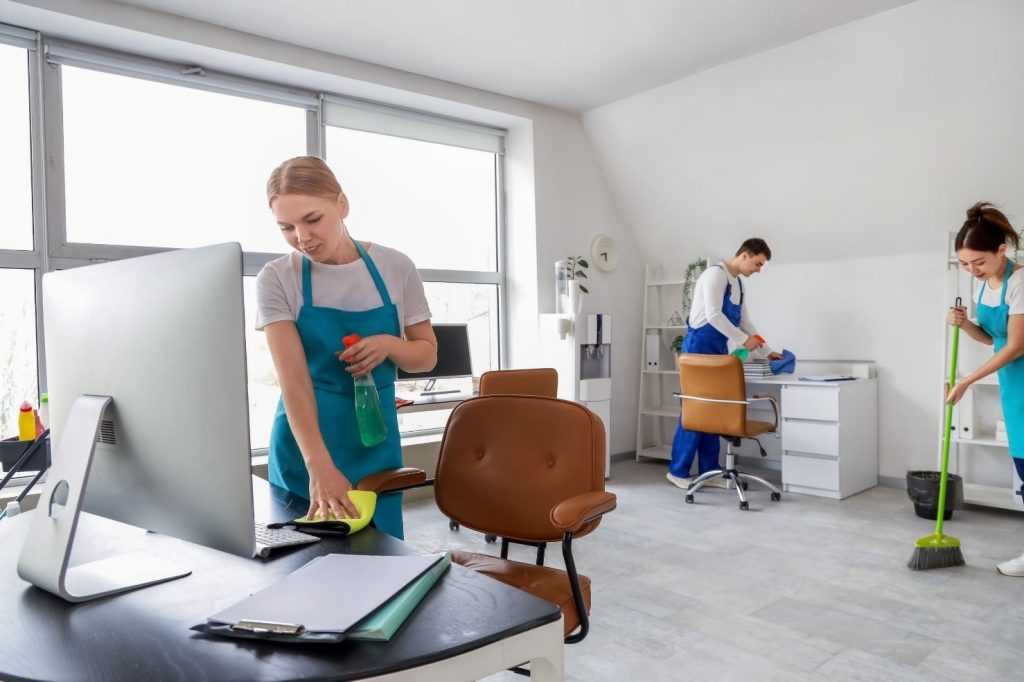
In a standard office environment, a routine clean should typically cover:
- Emptying waste bins and replacing liners
- Wiping desks and hard work surfaces (usually only clear areas — cleaning around personal items is a judgement call unless specified)
- Cleaning kitchen or break room surfaces, sink, and appliance exteriors
- Sanitising toilets, basins, and replenishing paper products and soap
- Vacuuming or mopping floors throughout
- Wiping door handles and high-touch areas
- Glass partitions and entrance glass (basic smear removal)
Periodic Tasks (Less Frequent)
Periodic tasks are often where misunderstandings arise. These are things that need doing regularly but not at every visit:
- Deep cleaning of kitchen equipment (inside microwaves, under appliances)
- Cleaning light switches and socket fronts
- Descaling taps and sanitaryware
- Cleaning blinds or window sills
- Shampooing or spot-treating carpets
- Cleaning vents and extractor fans
- External window cleaning (typically a separate service)
If periodic tasks aren't listed in your service agreement, they may not be getting done. It's worth reviewing what your arrangement explicitly covers.
How Frequency Affects Results
One of the most common mistakes businesses make is under-scheduling cleaning visits in an effort to reduce costs. The result is that cleaning staff face a larger accumulation of mess at each visit, have less time to do thorough work within the allotted hours, and visible standards slip.
For a typical busy office of 10–25 people, daily cleaning (5 days a week) is the norm. For smaller offices with fewer people or less daily footfall, three visits per week can maintain a reasonable standard. Below that, the quality of the workspace tends to deteriorate between visits in a way that most staff notice.
The right frequency isn't just about the number of desks — it depends on:
- Whether there's a kitchen and how heavily it's used
- The number of toilets relative to people
- Whether clients or visitors regularly attend the premises
- Whether the work generates particular mess (printing, food preparation, etc.)
A cleaning provider should be able to give you an honest view of the right frequency for your situation. Be cautious of any provider that agrees to a frequency you suspect is insufficient without raising any concerns.
The Kitchen and Bathrooms: Where Standards Are Most Visible
These two areas receive the most attention from staff and visitors alike. They're also the areas where poor cleaning is most apparent — and where hygiene genuinely matters rather than just aesthetics.
Kitchens in shared workplaces accumulate grime quickly. Spillages on worktops, residue inside microwaves, and build-up around taps and behind the sink are the most common areas that get missed with rushed or infrequent cleaning. A good office clean should include at minimum a full wipe-down of all surfaces, the outside of appliances, and the sink.
Toilets require attention to the areas that are easy to miss: behind the base of the toilet, around the seat hinges, and the area around hand basins where soap residue collects. Limescale is an ongoing challenge in hard water areas like London — it requires specific products and regular descaling rather than general cleaning spray.
Setting Clear Expectations
Many problems with office cleaning arise from unclear expectations. When both sides understand exactly what's included, the relationship works much better. When there's ambiguity, tasks fall through the gaps.
Before agreeing to a commercial cleaning contract, it's worth establishing in writing:
- Exactly which tasks are included at each visit
- Which periodic tasks are included and how often they'll be done
- What the cleaning team should do in the event they cannot access a room or area
- How complaints or concerns should be raised and what response time to expect
- What provisions exist for staff sickness or absence (is there a backup arrangement?)
What Good Communication Looks Like
The best commercial cleaning arrangements have a clear point of contact on both sides. If something isn't right, there should be a straightforward way to raise it — and it should be taken seriously.
Reputable cleaning providers will conduct periodic checks or ask for feedback rather than waiting for complaints. They'll also be upfront when something is beyond the scope of a regular visit — for example, if they find a stain on a carpet that needs specialist treatment.
If you find yourself repeatedly raising the same issues without improvement, that's a meaningful signal about the provider rather than an isolated incident.
Specialist vs General Office Cleaning
Some workplace environments have cleaning requirements that go beyond standard commercial cleaning. Medical or dental practices, food preparation areas, laboratories, and childcare facilities all have specific hygiene standards that require specialist knowledge and often different products and equipment.
If your workplace falls into any of these categories, it's important to be specific about your requirements when speaking to a cleaning provider. Standard office cleaning is not the same as clinical cleaning, and a provider should be upfront about whether they're equipped to meet regulatory standards in specialist settings.
The Role of Your Own Team
Workplace cleaning works better when staff play a basic role in maintaining standards between professional visits. This doesn't mean expecting employees to clean — it means reasonable housekeeping expectations like not leaving food out overnight, washing up their own dishes, and reporting spills or issues promptly.
Where these habits don't exist, no level of professional cleaning will produce a consistently pleasant environment. The two work in combination.
A Realistic Assessment
Professional office cleaning can make a significant difference to how a workplace looks, feels, and functions. But it works best when expectations are clear, frequency is appropriate, and communication between client and provider is straightforward.
If you're reviewing your current cleaning arrangement or considering bringing in a professional service for the first time, the most useful thing you can do is think carefully about what you actually need — and then find a provider willing to discuss it honestly.